


More than 400,000 teaching jobs in the United States now remain unfilled or lack fully certified staff. This nationwide shortage creates a clear path for internationally educated teachers to find stable work in American schools. You can start this journey by learning how each state evaluates your foreign degree.
A credential evaluation for teacher certification is the formal process that compares your international degree to United States academic standards to help you meet specific state licensing rules. Since every state runs its own board, you must get an evaluation report that matches the exact rules of the local board where you want to find work. The Learning Policy Institute reports that over 400,000 teaching positions are now unfilled, which makes this a perfect time to verify your degree through a trusted NACES member. International Education Evaluations provides reports that ensure your hard work abroad counts toward your US license while helping you avoid any confusing paperwork or costly delays right now.
Each state has its own list of approved agencies and specific credit hour requirements you must follow, so it is important to know which rules apply to you. You can see these differences clearly in our guide on Why a State-by-State Guide Matters for Your Teaching Certification. The process of choosing the right path begins with understanding the local landscape.
Get Your Credential Evaluation for Teacher Certification Started , Compare state requirements, choose the right report, and move closer to your US teaching license today.
Why Does a State-by-State Guide Matter for Your Teaching Certification?
In the United States, there is no single federal license for teachers. Each of the fifty states, plus Washington D.C. and the US territories, controls its own certification process. This means there is no one-size-fits-all credential evaluation for teacher certification. A report that meets the needs of one state board may not be enough for another.
The Growing Need for New Teachers
Many schools across the country face a big gap in their staff. Recent studies show that about 411,549 teaching jobs are either unfilled or held by people not yet fully certified. The need is greatest in subjects like math, science, special education, and bilingual classes. To solve this, many states welcome teachers who earned their degrees abroad. More than 857,000 foreign-educated teachers already work in the US. If you have a degree from outside the country, your skills are in high demand. But before you can start, you must prove that your education is equal to a US degree.
Why Every State is Unique
State boards of education set the bar for who can teach. The Florida Department of Education keeps a specific list of approved evaluation firms. Texas follows the Texas Education Agency standards. Each state board has its own credit hour rules and approved agencies. Some states require a full list of every class you took, while others only need a basic check. Using a state-by-state guide helps you buy the right report and avoid costly errors.
Navigating the Path to the Classroom
The path to a teaching license can feel complex, but our team at IEE has more than 44 years of experience in this field. We know how to help you meet state standards quickly. Check our general guide to teaching credential evaluations to see how the process works.
This guide walks you through the needs of each state and shows which reports work best for your goals. Knowing the local rules helps you move through the system with more confidence and get into the classroom fast.

What Are Florida’s Approved Agencies and Requirements for Teacher Certification?
Florida requires international teachers to use an evaluation agency from the FLDOE approved list. IEE is on this list. You will need a course-by-course evaluation (Teaching Licensure Report, $225) plus official transcripts and degree certificates to meet state standards for foreign-educated teachers.
Florida has one of the largest school systems in the US. If you want to teach in the “Sunshine State,” you must follow a clear path. Each teacher needs a state license from the Florida Department of Education (FLDOE). For people who went to school in other countries, this means getting a credential evaluation for teacher certification. This step proves your degree from home is the same as a US degree.
How Florida Approves Evaluation Firms
Florida is different because the state board picks which firms can check your papers. Many states just ask for a member of a large national group. But Florida keeps a set list of its own. You must use a firm from this official group to get your license. If you pick a firm that is not on the list, the state will not accept your report. This could waste both your time and your money.
The Florida Department of Education sets the rules for all teachers in the state. They check every person who wants to work in a classroom. They look at your school records and your past work. IEE is one of the firms the state trusts to do this work. We are on the set list of approved firms for Florida. This means our reports meet the high standards the state needs for its teachers.
Requirements for Foreign Documents
Florida has specific rules for your foreign school papers. You must submit a full set of your transcripts and degree certificates. These papers must come directly from your school or be true copies. If your papers are not in English, you will also need an official translation. Most teachers find that gathering these documents takes the most time. Starting this step early ensures you do not miss the start of the school year. Our team can help you understand exactly what you need to send for your Florida application.
Choosing the Right Report for Florida Licensure
When you apply for a Florida license, you need the right type of report. A simple document report is often not enough. Most boards want to see a full list of your classes and grades. This is called a course-by-course evaluation. It shows the state exactly what you studied and how well you did. IEE offers a Teaching Licensure Report for this exact need. This report costs $225 and covers all the details the Florida board looks for.
The state also has rules about which papers you must send. You will need to provide original papers or official copies from your school. Florida officials are very strict about these rules. They want to make sure every teacher has the right skills for the job. Getting your report early can help you start your career faster. You can check our evaluation pricing to see which plan fits your budget.
Texas and Louisiana: Southern State Requirements for Foreign-Educated Teachers
Texas (TEA) requires a course-by-course evaluation to verify a US bachelor’s degree equivalent plus an educator prep program. Louisiana also requires a NACES-member evaluation with a full course-by-course report. Both states accept IEE reports for their teaching license applications.
Southern states like Texas and Louisiana have clear paths for teachers who studied outside the US. Both states need you to show that your degree is as good as a local one. A credential evaluation for teacher certification helps you prove this. While both states ask for these reports, they each have their own rules for what you must give.
Texas Education Agency requirements
The Texas Education Agency (TEA) sets the rules for the Lone Star State. To teach here, you must prove you have the same value as a US bachelor’s degree. You also need to finish an educator prep program. The TEA looks closely at your specific semester credit hours to make sure you have the right background for your subject. You can find more details on these rules at tea.texas.gov.
If you choose to teach in Texas, you must also show you are good at English. Most people do this by taking a test or showing they studied in an English-speaking country. The goal is to make sure you can help your students learn well. Our teaching licensure report gives the full breakdown the TEA needs to see.
Louisiana teaching standards
In Louisiana, the Department of Education handles all teaching licenses. They need a full report from a group they trust. You must use a team that belongs to a group like NACES. IEE has been a member for many years and helps teachers meet these standards. You can check the state’s list of approved groups at teachlouisiana.net.
Louisiana also looks at your past teaching work. They want to see that you have the skills to lead a class. When you apply, the state will review your report to see if you meet their local laws. It is best to get a full course-by-course report to avoid any wait in your application.
How to start your Southern teaching path
Start your evaluation at least a few months before you want to work. This gives you time to gather documents and for the state to review them. If you are not sure which report to buy, our team knows the rules for both Texas and Louisiana. Call us at (704) 772-0109 to discuss your credential evaluation needs.
California: CTC-Approved Evaluation Pathways for International Educators
California’s CTC requires a course-by-course evaluation from a trusted agency. IEE’s Course Report ($195) or Teaching Licensure Report ($225) both meet CTC standards. You will need official school records, and IEE can send the final report directly to the CTC for you.
California is a top choice for many teachers who move to the United States. The state has a huge school system and many jobs. To teach here, you must get the right license. This work starts with the California Commission on Teacher Credentialing (CTC).
This board sets the rules for all public school teachers. Since there is no national teaching license in the US, you must follow state laws. You must meet the rules of the state where you want to work.
The Role of the California Commission on Teacher Credentialing
The CTC checks your background and skills. If you went to school in another land, they need to know if your degree is like one from a US college. They want to see that you have the right training to lead a class.
The board does not look at your foreign school papers on its own. You must get a credential evaluation for teacher certification from a group they trust. This report helps the CTC decide if you are ready to get your license.
Every state has its own way of doing this. For example, the Texas Education Agency has a different list of steps for its teachers. In California, the CTC only takes reports from agencies that follow high standards.
This keeps schools safe and makes sure all teachers are well-trained. You should start this work early to avoid a long wait when you apply for a job. Having your papers ready will help you move fast when a job opens up.
Choosing a CTC-Approved Evaluation Agency
To get your license, you must pick an agency that the CTC trusts. Many teachers choose International Education Evaluations (IEE) for this. We have been a NACES member since 1981 and have 44 years of experience.
We know how to handle school papers from all over the world. We have a special page for the CTC evaluation process. It shows exactly what you need to do to start your report.
Using a group like IEE saves you time because we know the board rules. We check your school records to see if they match what the state needs. Our team works fast to get your report done in just three days.
This speed is a big help when schools are looking to hire new teachers. Once we finish, you can send your papers to the state right away. This helps you get into the classroom sooner.
Getting Your California Teaching Credentials Evaluated
Most foreign teachers in California need a Course Report ($195) to show every class you took and your grades in US-comparable format. For more detail, the Teaching Licensure Report ($225) is tailored for teaching boards. You will need to send us your official school records. We evaluate them and can send the final report directly to the CTC for you.
If you are not sure which report is best, call us at (704) 772-0109. We will help you start your teaching career in California.
New York, Georgia, and New Mexico: Additional State Profiles
Each state has its own path for foreign-trained teachers. New York, Georgia, and New Mexico use set boards to check your skills. You must meet their rules to get a license to teach in their schools. A credential evaluation for teacher certification shows your degree is the same as one from a US school. This ensures you have the right background to lead a classroom.
New York State teacher requirements
The New York State Education Department (NYSED) manages all teacher licenses in the state. New York has strict rules for people who studied in other countries. You must show that you have the right training and a degree that fits their needs. Most people will need a full course-by-course report to prove their past work meets the certification standards. This report breaks down every class you took and the grade you earned.
IEE works closely with New York to help teachers through this task. We have a special page to guide you through the process for this state. This page lists the exact steps you need to take. As a NACES member, IEE provides the high-quality reports that NYSED needs. Using an agency that knows these rules helps you avoid simple mistakes. This can save you time and keep your application moving forward.
Georgia certification process
In Georgia, the Georgia Professional Standards Commission (GaPSC) manages all educator licenses. They set the bar for who can teach in Georgia classrooms. Like other states, Georgia needs a clear look at your foreign transcripts. They want to see your grades, credits, and the type of degree you earned abroad. This process helps them check that your schooling meets local teaching standards. It is a key step for any teacher moving to the state.
You can find more details on our Georgia Professional Standards Commission page. IEE provides the reports that Georgia boards trust for their reviews. Our team knows what the state looks for in a foreign degree. We make sure your evaluation meets their set codes. This helps you move from the application phase to the classroom much faster. Our three-day turnaround means you won’t have to wait long to get your results.
New Mexico licensure standards
The New Mexico Public Education Department (NMPED) handles teaching licenses in the state. They need a valid evaluation from an approved agency for all foreign-trained staff. New Mexico faces a large need for teachers in areas like math and science. If you have these skills, getting your papers in order is your top goal. The state wants to fill open spots with people who are ready to help students succeed.
New Mexico needs a detailed look at your teacher prep program. They want to be sure your training matches US standards for new staff. IEE is an approved choice for these reports. You can visit our New Mexico Public Education Department page to start your file today. We offer 24/7 support if you have questions about your documents. Our team is here to help you get through the system and get to work.
Comparing State Requirements Side by Side
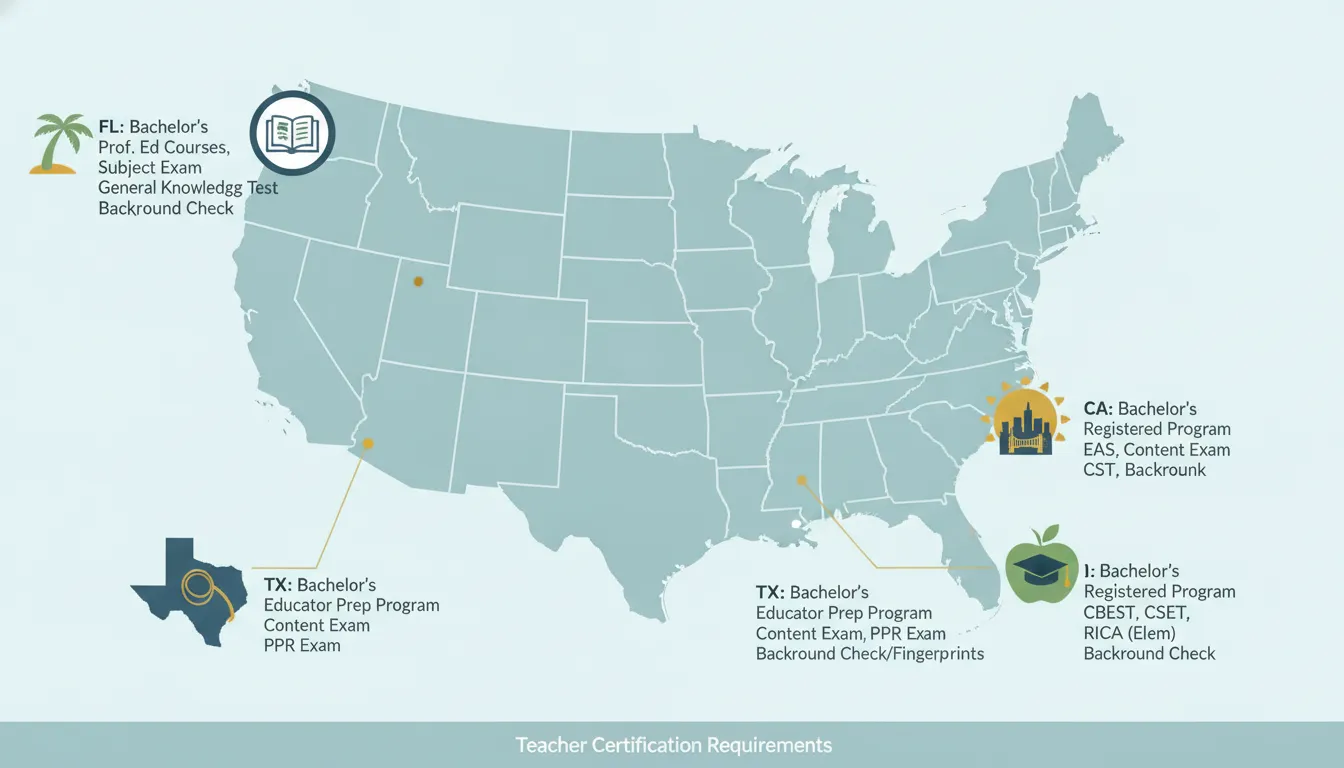
Across all 50 states, most teaching boards require a course-by-course credential evaluation from a NACES-member agency. Florida maintains a specific approved list, while Texas, Louisiana, California, New York, Georgia, and New Mexico each use their own board standards. A course-by-course report is the minimum requirement for all seven states profiled here.
Key differences in state rules
Some states give you a clear list of agencies to use. Other states let you pick any NACES member. You must know which rule applies to your state before you buy a report.
Most states need a full check of your past classes and grades. This is often called a course-by-course evaluation. It shows how your foreign degree matches a US degree. It also lists each subject you took and the credits you earned. This type of report helps boards see if you have enough hours in the subject you want to teach.
Understanding agency approval
State boards have strict rules for evaluation agencies. Many states trust NACES members. IEE has been a NACES member for more than 44 years, which helps your report meet state standards.
Some states like Florida keep a direct list of groups they trust. IEE is on that list. Other states like California use their own commission to set rules. You should always check with your local board to see which groups they accept.
| State | Evaluation Required | Approved Agency List | Minimum Report Type | Extra Rules |
|---|---|---|---|---|
| Florida | Yes | FLDOE Approved List | Course-by-Course | IEE is clearly listed. |
| Texas | Yes | NACES/AICE Members | Course-by-Course | Verify US bachelor degree. |
| Louisiana | Yes | Approved Agency | Course-by-Course | NACES member required. |
| California | Yes | CTC Approved List | Course-by-Course | Check via CTC portal. |
| New York | Yes | NYSED Approved List | Course-by-Course | Handled by NYSED Office. |
| Georgia | Yes | GAPSC Approved List | Course-by-Course | Commission sets standards. |
| New Mexico | Yes | NMPED Approved List | Course-by-Course | Licensure board approval. |
Common patterns in state licensing
Most states look for two main things in your report. First, they want to see if you have a degree that matches a US bachelor’s degree. Second, they need to see that you finished a teacher preparation program. There is no federal teaching license, so each state controls its own process.
The table shows that most states want a detailed report. A simple document report is rarely enough for a teaching job. Most boards need to see your specific credit hours. States like Texas also check if you met the credit goals for the subject you want to teach. For example, math teachers must show they took enough math classes in college. You can find more details in our guide to teaching evaluations.
Most states also require your evaluation to come from a NACES member. This keeps the quality high across the country.
Choosing the Right Evaluation Report for Teaching Certification
Selecting the right report is the first step in your credential evaluation for teacher certification. Most state boards have strict rules about the type of document they will accept. Using the wrong report can lead to delays or extra costs. IEE offers three main types of reports to meet these needs, with a fast 3-day standard turnaround.
The standard for teaching boards
The best choice for most teachers is the Teaching Licensure Report ($225). This report is built for state teaching boards. It organizes your school history in a way that board staff can review. It matches your past courses to US teaching standards.
Many states also accept a standard Course Report ($195). This report lists each class you took, your grades, and your credit hours. While it costs less, some boards still want the teaching-specific format.
Comparing cost and speed
The Teaching Licensure Report ($225) costs $30 more than the Course Report ($195), but it includes the specific language and formatting that state teaching boards expect. Most internationally educated teachers find the extra cost worthwhile because it eliminates back-and-forth with the state agency. Turnaround time is the same for both reports , IEE completes evaluations in just three business days, regardless of which report type you choose. The real cost savings come from getting the right report the first time, avoiding a $195 re-evaluation fee if your first report is rejected by the state board.
Why state rules matter
Each state board sets its own rules for report types. Some states have a list of approved firms and specific reports they like. You should always check with your state board before you buy a report. Most boards want to see the exact credit hours you earned for each class you took in college.
The National Association of Credential Evaluation Services (NACES) is the gold standard for these reports. IEE has been a NACES member since 1981. This long history means state boards trust the reports we issue. Choosing a NACES-member firm like IEE ensures your report meets the high standards that state boards need.
How Do You Get Your Credential Evaluation for Teacher Certification?
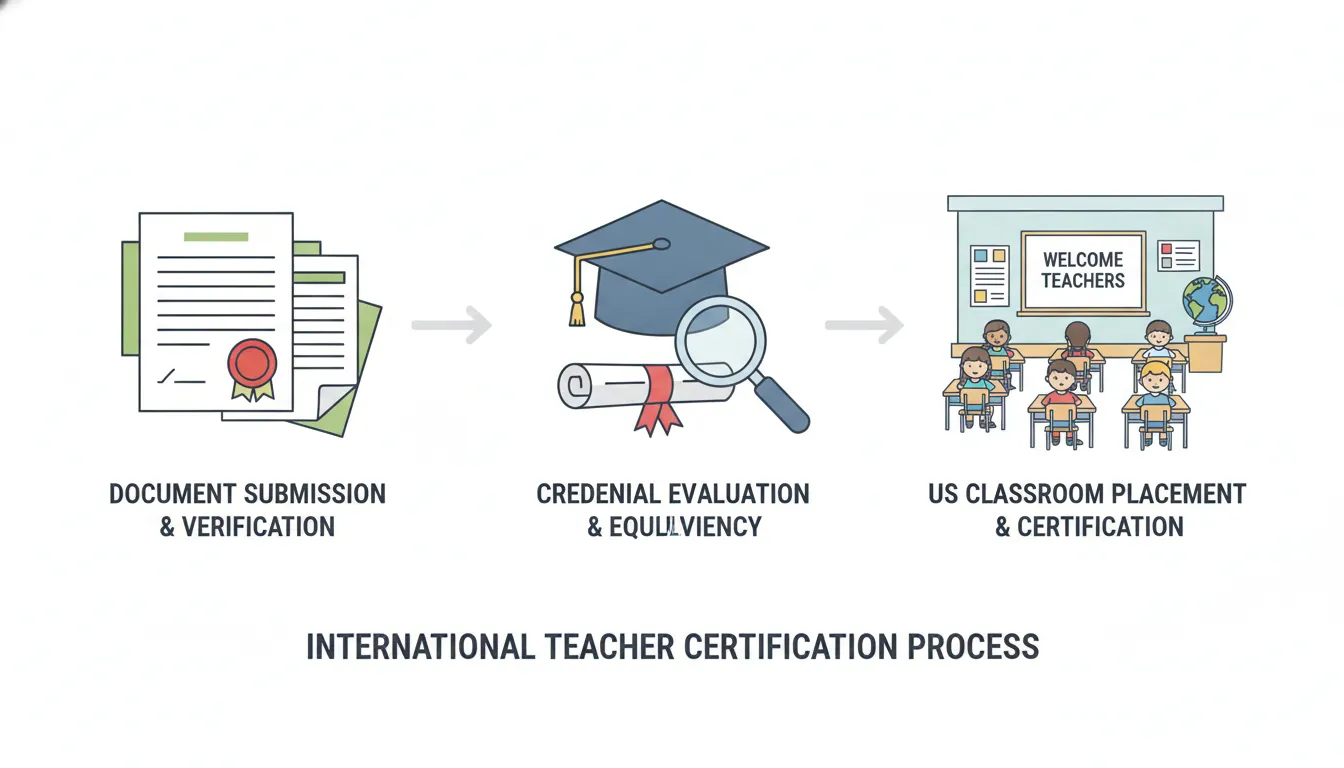
Getting a credential evaluation for teacher certification involves a few key steps. These steps ensure your foreign degree meets local standards. By following a clear path, you can avoid delays and reach your teaching goals. Our team at IEE gives you 24/7 support to help you through each part of this task.
Understand state rules
Each state in the U.S. has its own rules for teacher licensing. You must first look up the specific needs for the state where you plan to teach. Some states need a general report, while others need a more full look at your specific school courses. You can find more facts in our guide to teaching credential evaluations.
Choose an approved agency
Most state boards only accept reports from groups that belong to NACES. IEE has been a NACES member since 1981 and has given trusted reports for over 44 years. Using an approved group ensures that your state board will accept your final report. This helps you avoid losing time and money on reports they cannot use.
Follow these steps to apply
- Research needs. Visit the site for your state’s board of education. See exactly what they need for teachers trained in other lands.
- Select your report. Choose a Course Report ($195) or a Teaching Licensure Report ($225). Most boards need a course-by-course list.
- Gather papers. Collect your school records, degrees, and teaching certificates. You will also need English translations for any papers not in English.
- Submit your form. Fill out the online form at myiee.org. Upload your scanned papers to our safe site.
- Track your work. Once you send it, our team starts work. We offer a 3-day turnaround for standard reports to keep your work moving fast.
- Get your report. You will get your finished work in as few as three business days. You must then send the official report to your state licensing board.
Select the right report type
Choosing the wrong report type can lead to a failed form. A basic Document Report ($95) is rarely enough for teacher licensing. It does not show individual credit hours. Most boards need to see your specific grades and subjects to know you are ready to teach. For more on the Texas Education Agency or other state rules, check their official sites.
Frequently Asked Questions
Does a credential evaluation guarantee a US teaching license?
No, a credential evaluation does not guarantee that you will get a teaching license. According to IEE, the evaluation only shows that your foreign degree is equivalent to one from the United States. Each state board of education makes the final choice on your certification. You must also meet other state rules, such as passing background checks and exams, to get your license.
Can I use the same credential evaluation for multiple states?
You can often use one evaluation for more than one state, but you should check with each board first. Since each of the 50 states sets its own rules, some might need a specific report type or a different agency. If you plan to apply in many states, tell your evaluation agency. They can help make sure your report meets the needs of every board.
What documents must I provide for a teacher certification evaluation?
You usually need to provide your original degree or diploma and your full academic transcripts. These transcripts must list every course you took, your grades, and your credit hours. IEE notes that rules can change based on the country where you studied. It is best to check the list for your home country to make sure you have everything needed for a fast three-day turnaround.
Can I use a basic document report for my teaching application?
A basic document report is usually not enough for a teaching application. Most state boards need a Course Report or a Teaching Licensure Report. According to IEE, these reports provide a detailed list of your subjects and grades. Because teacher certification needs specific course credits, the state board must see your full academic history to check that you are ready to lead a classroom.
Waiting too long to start your credential evaluation for teacher certification can mean missed state licensing deadlines. That could delay your start by a full school year. When you act today, our three-day turnaround helps you move into the classroom sooner.
Ready to get started? Call (704) 772-0109 to discuss your teaching credential evaluation and choose the right report for your state.